

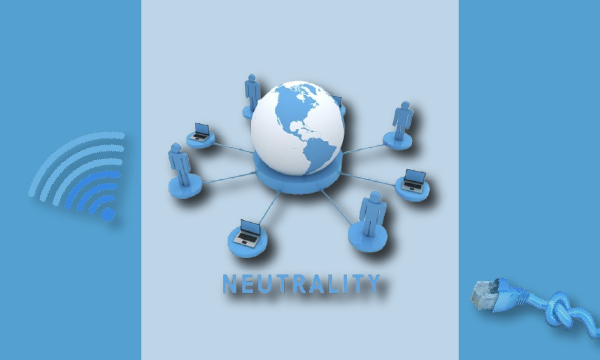
Net neutrality is the principle that Internet Service Providers (ISPs) should ensure the equal and non-discriminatory transmission of all internet traffic, without giving preferential or restrictive treatment to specific services, applications, or platforms.
Simply put, an internet provider should not be able to decide that, for example, Netflix should operate more slowly while its own video service loads faster, or that access to certain websites should only be available after paying an additional fee.
Net neutrality has become increasingly important with the rapid growth of OTT (over-the-top) platforms. Services such as Netflix, YouTube, Disney+, and Amazon Prime Video generate enormous volumes of internet traffic while competing directly with traditional television providers and operators' own video services. If operators are allowed to prioritize certain types of traffic, they could accelerate the delivery of their own video platforms, slow down competing OTT services, or charge customers additional fees to access specific applications or content.
At its core, net neutrality is based on the principle that all users should have equal access to online content and services under the same conditions.
In the era of OTT platforms, net neutrality has become a key issue for the television and telecommunications industries, as the internet has evolved into the primary infrastructure for television distribution. Preserving net neutrality prevents operators from using control over their networks to disadvantage competing video services.
The principle of net neutrality has both supporters and opponents.
Opponents are primarily internet service providers and telecommunications companies. They argue that operators should have greater flexibility to manage their networks efficiently in order to maintain service quality and network stability. They also believe that companies generating the largest volumes of internet traffic should contribute more to the cost of network development. Platforms such as Netflix, YouTube, and Disney+ place significant demands on network infrastructure and, in their view, should bear a greater share of the investment required to expand and maintain those networks. In addition, they argue that operators need greater commercial flexibility to develop differentiated service packages and innovative offerings for consumers.
Supporters of net neutrality, on the other hand, argue that equal competition is essential for a healthy digital marketplace. Every online service and platform should have an equal opportunity to compete and grow. They believe that internet providers should not restrict users' access to particular websites, applications, or online services. Net neutrality also enables smaller companies and start-ups to compete with large technology companies by ensuring a level playing field. Most importantly, it prevents discriminatory practices by prohibiting operators from slowing down or blocking competing platforms in favor of their own services.
The regulation of net neutrality varies considerably around the world. While some countries protect the principle through comprehensive legislation, others apply more flexible regulatory approaches or impose only limited requirements.
Within the European Union, Regulation (EU) 2015/2120, which has been in force since 2016, forms part of the EU's Digital Single Market strategy. The regulation establishes common rules for open internet access across all Member States. Net neutrality in the EU is based on the principle of non-discriminatory traffic management. Internet providers are prohibited from blocking or slowing down specific platforms, restricting competing services, or creating paid prioritization arrangements. At the same time, the regulation allows limited exceptions for network security, congestion management, and certain specialized services.
In the United States, net neutrality has been the subject of political and regulatory debate for many years. In 2015, the Federal Communications Commission (FCC) adopted strict rules prohibiting internet providers from blocking or throttling traffic or offering paid prioritization. These rules were repealed in 2017, placing broadband internet under a lighter regulatory framework. In 2024, the FCC attempted to restore net neutrality protections; however, in 2025, a federal court halted the enforcement of those rules. As a result, the United States currently operates under a mixed regulatory model. While there is no uniform federal net neutrality regime, individual states have adopted their own policies. For example, California and Washington continue to enforce strong net neutrality protections.
India has adopted one of the strongest net neutrality frameworks in the world. The country's telecommunications regulator, TRAI (Telecom Regulatory Authority of India), has introduced rules prohibiting discriminatory pricing based on content, preferential treatment for specific services, and artificial restrictions on internet traffic. For example, operators are not permitted to offer plans where WhatsApp is free to use while access to Telegram requires an additional fee.
China follows a fundamentally different approach. Internet access is subject to extensive government control, including content filtering and restrictions on access to numerous online platforms. In China, the issue extends well beyond traffic management by internet operators and forms part of a broader state-controlled regulatory framework governing online communications.
The case of Ukraine is also noteworthy. Officially, Ukraine follows the European model of net neutrality. However, since 2022, special measures have been introduced in response to the country's security situation. The government and the national regulator are authorized to implement temporary technical measures to protect critical infrastructure and ensure the continuity of communications. Restrictions apply to online platforms and services that Ukrainian authorities consider to pose a threat to national security. As a result, access has been restricted to services such as Mail.ru, VKontakte, Odnoklassniki, Yandex, Kaspersky Lab, Dr.Web, and a number of other websites and online platforms.
Net neutrality remains one of the most important issues facing the modern telecommunications industry. As digital services and OTT platforms continue to expand, its importance is expected to grow further, while governments and regulators around the world continue to seek the most appropriate balance between protecting an open internet and enabling efficient network management.
Source:
www.digital-strategy.ec.europa.eu
www.eur-lex.europa.eu
www.theverge.com
www.reuters.com
www.dot.gov.in
www.congress.gov
www.ncsl.org
www.allconnect.com
www.multistate.us
www.nkek.gov.ua
www.zakon.rada.gov.ua
www.freedomhouse.org
www.webportal.nrada.gov.ge

